7th August 2017
Mastering Your Mindset Volume 1: Can your lunch really effect your performance?
Before you delve deep into this blog, this certainly is not another lambasting article on carbohydrates. I am a big fan of carbohydrates, I don’t advise massively limiting them unless you want to and I believe fat loss can occur just as quickly as someone who is on a low carbohydrate diet. When I say believe, I mean it’s a fact, I know it can. Adversely, I completely appreciate how going ‘low carb’ for a weight/fat loss goal can be a quick and easy fix. Removing a macronutrient that is often anywhere from 30 to 55% of most people’s diet will inevitably incur weight-loss. It’s not rocket science. Achieving fat loss/weight loss (I use the term weight loss loosely) on a balanced nutritional diet is the ultimate long term goal. Up on the next blog i'm going to look at how to manipulate energy balance (energy in/energy out) if your goal is to lose weight.
Anyway, let’s look at what a carbohydrate is, then following on from that how our bodies react when you eat it and whether this reaction can have a direct impact on concentration and performance at work.
Carbohydrates are sugars that are broken down inside our bodies to create glucose. This is then transported around our bodies and used as a primary source of energy, as well as our muscles and other essential cells utilising it. To regulate the glucose within our blood, insulin and glucagon are produced from the pancreas. When a carbohydrate is consumed blood sugar levels increase which is when insulin is secreted in order to manage this.
Your typical carb can range from potato, rice, wheat, bread to vegetables and to the slightly more addictive foods such a chocolate and sugary sweets. Unfortunately its the best tasting food, for me anyway.
So, is there a link to this decrease in blood sugar after eating a heavy carb lunch some hours after to that afternoon slump that I know so many people struggle with? Possibly. Individually we are all so different and I’m sure many can have a heavy carbohydrate lunch and feel fine throughout the entire afternoon as much as I am sure some would struggle and not be able to identify why. Couple this with a sedentary job an 8 – 12-hour work day and it might be worth addressing if you do find yourself going into the office kitchen a couple of times during the afternoon.
A couple of factors to consider. Firstly digesting your food. The food you eat for lunch diverts blood away from the brain to help with the digestion process. Also feeling particularly full isn't massively conducive for a working environment. Your body will also release melatonin which is a hormone that aids sleep.
To avoid such extreme high lows, opt for a higher protein & fat based diet. Carbs don’t need to be completely avoided but might be worth trialling. Some additional steps I would take;
- Eat Breakfast and look at how nutrient dense your breakfast is
- Reduce caffeine consumption
- Drink water (mild forms of dehydration can trick the body to thinking its hungry)
- Get a good nights sleep aim for minimum 7 hours sleep
- Look at what you’re eating the evening before
Below two very popular eateries within 100m from where I work. Itsu and Wasabi both offering not to dissimilar types of foods. Here I have compared two dishes from Itsu and a very popular lunch option from Wasabi. Il also add it was quite difficult finding nutritional information on Wasabi and was very surprised to find out the Katsu Curry potentially surpasses 1000 kcals of which I am very sure Mr Smith who east it a couple of times a week has no idea of.
Low Carb – Itsu
Mixed Sashimi
385 kcal / Pro 43.5g / Carbs 4.3 / Fat 3.9g
Veggie Threesome
109kcal / Pro 1.9g / Carbs 16.9g / Fat 3.5g
Total: 494 kcal / Pro 45.4 / Carbs 21.2 / Fat 7.4
High Carb – Wasabi
Chicken Katsu Curry
1142 kcal / Pro 41g / Carbs 165 / Fat 35g
Total: 1142 kcal / Pro 41g / Carbs 165 / Fat 35g
12th July 2017
Fat Loss Food for Real People Volume 1: The 6 Commandments
Fat Loss Food for Real People - The 6 Commandments
One: Green is God
Make greens/vegetables the foundation of your diet. Do you best to make sure they are a part of every plate you eat. Another point, you would have to eat half a kilogram of asparagus to ingest the same amount of carbs as you get in a single whole meal pitta bread.
Two: Protein with EVERYTHING
Protein will be one of the most important components of your diet and when you eat a high protein diet you're generally less hungry, eat less and lose body-fat as a result.
Three: Fat is your Friend
Fat will not make you fat. Eating too much will. In fact good quality fats are important if you want to build muscle and burn body fat because the macronutrient plays a number of roles in energy expenditure and vitamin storage.
Four: Eat Real Food
An essential RULE. Follow the guidelines the best you can to eating food that once grew out of the ground or had a face.
Five: Alcohol
Alcohol along with rule 5 also play an important role. Rather than completely eradicating this from your diet, you will need to make a conscience effort to reduce your alcohol intake. It not only inhabits your ability to build and repair muscle, but can be hugely calorific. There are roughly 200 calories in a pint of lager. 3 pints = 600 calories approx. If you’re trying to lose body fat then 3 pints will equal around a ¼ of your total daily calorie intake.
Five: Sugar
Again calorie packed, taste good but provide the body practically nothing nutritionally and I have never known a packet of Revels or a Chocolate Muffin to completely satisfy satiety. Revels, 35g bag = 168 calories. A medium sized white potato weighing over 200g contains less calories and more likely to fill you up. That’s almost 6 times more in grams and still less calories. Options – sugar cravings are perfectly normal and there are plenty of low calorie sugary foods out there.
5th July 2017
Exercise Education Volume 1: The Warm Up
Exercise Education – The Warm Up
Never underestimate or overlook the importance of a dynamic warm up before training. The warm up is there to prime your muscles and nervous system for peak performance. Finding the balance between not doing too much and doing too little during your warm up is also important.
It should be dynamic, cover multiple joints, increase blood flow and increase muscle temperature. A warm muscle can contract quicker whilst reducing the elastic resistance in the muscle. This is good, very good, especially for resistance training. This will reduce the risk of injury and allow you to perform better during your session.
Bowling into the gym Conor McGregor style and jumping straight under a barbell is a sure-fire way to leave with a back injury or muscle strain.
It is important to address mobility through the ankles, hip, thoracic and shoulders. Covering these areas becomes hell of a lot more important when you spend 8 – 12 hours a day slumped or hunched in your chair staring at a computer screen. Your quality of life would vastly improve doing this even if you didn’t step foot in a gym. You would be able to move a whole lot better which most of the general population cannot do.
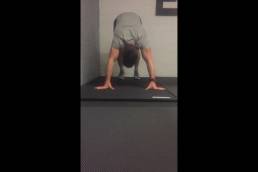
I take my clients through a dynamic warm up before every session so much so it becomes ingrained. Starting on the ground progressing to standing, most of the content in the video is my ground work which would last between 6 to 8 minutes and following on from that it would lead into some single leg lunges for example.
10th June 2017
Time to Reflect…
Its incredible how quickly this year has gone. Its June, and I haven’t posted anything since January. That really is unacceptable, and it’s been a weight on my shoulders that has needed lifting.
Prior to 2017 I set myself a few business orientated targets. I wanted to push things forward, be ambitious, put in more hours, meet more people, learn more. It has gone well, better than expected. Which is great. One thing I do is never take anything for granted, I could wake up tomorrow and it could all be gone, i'm not going to settle or get comfortable.
'Get comfortable being uncomfortable'
With a good start to the year however, my social media posting and blogging has suffered.
It is incredible how aware you can be of something that you know needs doing, but do nothing about it. Make an excuse, I’ll do it tomorrow, just keep pushing it to the back of the ‘to do list’ where it never goes away, it'll just look at you every day.
Something finally clicked, it took a 45 minute run in the country back where I grew up, some actual time to step back away from everything and reflect on what has happened this year, what I have done great and what I could have done better. It really did feel amazing to feel my heart beating out of my chest, getting my sweat on, breathing in some fresh air on and switching off. Its hard to shut off and rarely do I feel that i'm not thinking about what to do next, how to push things a little further. When I do shut off however, is where I can become more creative and take a step back from things and reflect on what needs to be done.
Previously my blogs have always been to do with something I have found interesting, or thought anyone reading them might find beneficial. Moving forward I’m going to add a little more structure. I have created the below categories which I believe will offer the most which I will draw from my own experience. Relevant and topical information.
- Fat Loss Food for Real People
- Exercise Education
- Ignite Your Mind and Body
Fat Loss Food for Real People
How to eat yourself lean whilst not 100% clean. The best way to some this section up. Here I will look at how to optimise fat-loss whilst still being able to enjoy your life. I don’t beat around the bush, I will say it how it is, and you can feel a lot more confident in how you look and feel and still be able to enjoy a glass of wine or a few beers.
Exercise Education
Exactly what is says. Tips ranging from exercise form and safety, what may or may not work best for you and your body.
Ignite Your Mind and Body
Food for the brain. Varying from tips on how to manage stress, be more confident, to managing and navigating around your brain. Il draw all of this from books I read and share the information that has most had the impact on me.
I will post a blog every two weeks, in order of the above.
Blog 1 will be 'The 6 Commandments' the first under the 'Fat Loss Food for Real People' category. It'll cover everything from the foods that make up your plate and why, sugars, fats and alcohol.
Thanks For Reading
Luke
24th January 2017
Joint Health & Longevity
We all have very personal reasons why we do this. It might be yoga, resistance training or running. Whether it’s to look good, feel more confident or destress and release whatever tension you have built up throughout the day at work. Do we ever considered our joint health a key reason for training?
How is it some of us can run for an hour without stopping or Bench Press 100kg. Do we take for granted how our body’s get us from A to B? When the benefits of resistance training not only help us look dam good or destress from a tough day at work – but can also keep our joints in good health.
Lifting weights or resistance training offers numerous benefits. Exercise keeps muscles around the joints strong, decreases bone loss and helps control joint swelling and pain. This becomes increasingly important as we get older.
Tips: If you’re new to the gym, master body weight exercises first. Don’t attempt to lift too much weight and make sure you’re doing it correctly.
Stretch. Spend a couple of minutes before bed and/or when you wake up. Stretching and mobility becomes even more important prior to exercise. Consistent stretching will ensure your muscles are limber and will allow your joints to move more freely.
Stay hydrated, water is necessary for the body to fight inflammation and heal damaged tissue. A dehydrated joint in more susceptible to injury.
Eat Healthy Fats – The first step to recovery is to reduce inflammation. This will in turn allow our body’s to start repairing tissue. Healthy fats such as Olive Oil, Nuts, Wholes Seeds and Avocado’s are also known to help.
27th November 2016
Your Why
2. Find Your Why.
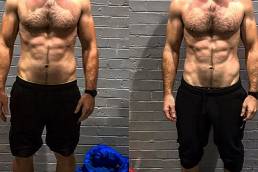
What I want is for people to feel good and be body confident. For most that’s really why we all do this and there is nothing wrong with feeling great and looking good naked. I was massively guilty of spending too much time wishing I was super lean and struggled for some time figuring out how to go about this.
I could never do anything consistently for long enough; Id lose weight then id put a little back on, id lose interest and give up. I just couldn’t do anything for long enough. I was never completely out of shape, but wasn’t happy. I finally figured out that following someone’s else’s goal, wanting someone’s else’s body wasn’t what I actually wanted. Social media plays a huge role in how we perceive we should look. Trust me, almost all of the people you aspire to look like don’t look like that most of the time unless they’re freaks or taking something your parents wouldn’t be proud of.
I made a few minor tweaks to my nutrition with some help and I’m now the leanest I have been, have a good relationship with food and have maintained this now for some time. I still socialise a lot, its fun, I still eat pop tarts, and I’m still referred to as the cookie monster. I am very open about this because demonising foods I actually enjoy eating would set me up for failure. There is no sign of some fad diet, restricting carbs or spending a couple hundred quid online with a coach that knows nowhere near what he or she should.
1. Start with increasing your energy expenditure, download an app that tracks your steps, hit 8,000 to 10,000 a day or 70,000 a week. 2. Figure out what works for you. Do you enjoy running? Then run. Do you enjoy spin classes? Book a class. Like lifting weights, then lift. You’ll fail if you don’t enjoy it. 3. Identify the ‘why’. A goal that is personal to you, that connects with you, that is yours, and can you achieve it, if not you’ll fail and have up and down success forever. 4. Stop chasing another person’s goal. Dig deep and figure out exactly what it is you want. Want to lose weight? Why do you want to lose weight. Then break it down in smaller achievable goals 5. Seek help but invest wisely. Ask friends and family, see what has worked for others and find an approach that works for you.
I’m certainly not shredded and don’t want to be but spent far too long wishing I was. Figure out your why…
12th November 2016
Cholesterol Covered!
I’m not entirely sure on how I personally feel stating that 2016 has been a year of good health as we draw closer and closer to Christmas. It has for some been a fantastic year for healthy eating and cook book sales seem to have done very well. I do believe there is certainly more awareness of health, people seem more conscience of what they’re eating and not only this understand more what is actually in the food we are consuming. That’s a good thing.
A few clients this year have had health screens which I think is a fantastic thing, nowhere near enough of us invest in our own health, me included. What has prompted this blog was a result that more often than not comes up high on any health screen, Cholesterol!! So I thought today I would cover what it actually is, where it comes from, and the impact it has on out health if its high. Is Cholesterol really the devil we know.
What is it? It’s a waxy, fatty like substance that can be found in the cells of our body and travels in our bloodstream called lipoproteins. There are two kinds, LDL (low density lipoproteins) and HDL (high density lipoproteins). Having both is important, however having high LDL can be an issue.
Our bodies need some Cholesterol to make hormones, Vitamin D, and substances that help with food digestion, its also found in some of the foods we eat and is predominantly produced in our liver.
Having high LDL can thicken our blood which can lead to circulatory and cardiovascular problems such as heart attacks or blood clots which is why is important to keep on top of the type of foods we are eating.
How to keep on top of your Cholesterol? Firstly, if you smoke, stop, and if you don’t exercise, start. Foods that are high in saturated fat such as butter, cheese, creams and very fatty meat can also increase the LDL within our bloodstream.
The best advice I can offer is eat a varied and balanced diet, do as much walking and exercise as you can and if you haven’t a health screen to see where your current cholesterol is at then it might be worth it.
15th September 2016
Face Pull for Shoulder Health
Internally rotated shoulders are common place in the modern day. Poor posture, desk bound jobs, driving, eating, even now reading this most your shoulders are more than likely internally rotated.
Face pulls are a multi-functional exercise that will not only serve in making you stronger but is also highly effective movement for improving shoulder health and posture.
If you do lots of horizontal and vertical pressing then the Face Pull is a fantastic exercise to help invigorate your lifting whilst placing emphasis on the the external rotators of the shoulder, Rhomboids and Rear Delts.
Incorporate Face Pulls into your programme and start strengthening the external rotators of the shoulder pulling it back into a better position improving posture.
9th September 2016
Feeling Tired….?
Tired? More often than not when I ask a client how their week is going, how they’re feeling the reply will be ‘tired today’ or ‘its been a long week’ which to be fair is usually the case given the stresses of work, commuting and colleagues this is without considering that the average daily hours worked in the City are significantly higher than anywhere else in Europe.
I see daily what tiredness can do which prompted this blog. I want to share 3 simple steps that are easy to implement and cost-effective. Tips that will not only improve your concentration and efficiency throughout the day, but more importantly benefit your health.
Hydration. This is most definitely the easiest, cheapest and quickest way to reduce the side effects of fatigue. 9 times of of 10 I know that most of my clients haven’t consumed anywhere near enough water. Dehydration occurs in stages, and it doesn’t take much to become mildly dehydrated which can impair concentration and thinking. If you struggle with water then consuming water dense foods such as Cucumber (96.7% water content), Celery (97.4%), Ice-burg lettuce (95.6%), Tomatoes (94.5%). Or buy a refillable bottle that can sit on your desk and depending on how many litres it can hold consume 2 litres worth a day.
Entering the realm of food now, and Protein is a very hot topic. Question, do you know how much protein you have eaten today? And I’m not talking grams, I’m talking portions, can you count at least 3 portions of meat or fish you have eaten today? If not, more than likely you haven’t consumed enough. A diet deficient in protein can lead to an increase in stress levels, moodiness, disturbed sleep and low energy levels. Without protein to help stabilise our blood sugar, the tendency to experience fatiguing highs and lows in mood and energy increases. Over a long period of time these high and lows can exhaust the body – couple this with poor hydration and you aren’t going to feel great.
Last and by no means least, it seems obvious as well SLEEP! During sleep our body’s go through many different processes of rejuvenation and hormone regeneration. The goal is 7 hours minimum per night, if you think you can function on 4 or 5 hours then maybe you can we are all different and know our body’s but you may be missing a trick you could be performing to even higher levels with a couple of more hours that what you’re already getting. Sleep like dehydration happens in stages from light to deeper sleeping. Its very hard for the body to get into a deep sleep if you’re sleeping less than 7 hours per night. Lastly, sleep in a dark room, pitch black if possible and try to stay away from electrical lighting before bed so the brain can shit down.